Unmanned shifts place high demands on clamping technology
Workpieces must be clamped securely and reliably, even when there is no operator at the machine for extended periods. At the same time, short set-up times, high repeatability and good suitability for automation play a crucial role.
Which clamping vises are therefore suitable for unmanned production? Depending on the automation concept, a range of solutions are used – from pallet automation and vice automation to direct workpiece loading.
1. Clamping technology for pallet automation
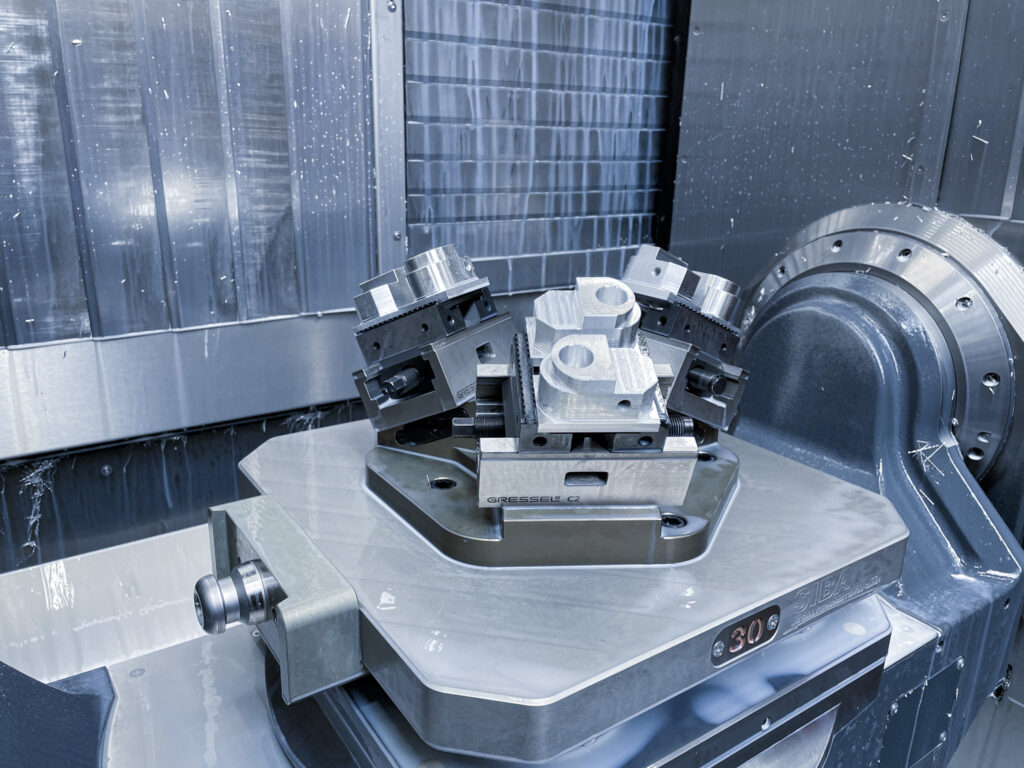
In automated production lines, prepared pallets are often fitted with clamping vises and then automatically loaded into the machine tool. This requires flexible clamping systems that enable different workpieces to be machined quickly and reliably.
GRESSEL offers a wide range of clamping vises for pallet automation. With the three product groups – C2.0, S2 and D2 – there are over 350 possible combinations available. This allows the clamping technology to be flexibly adapted to different workpiece sizes and machining tasks.
- C2.0: Centric vise
- S2: Single vise
- D2: Double vise
Pyramids and tombstones are also available for multiple clamping points. One example of this is the gre4doc multi-workpiece clamping systems, which allow several workpieces to be clamped onto a single pallet, thereby making optimum use of the machine’s capacity.
2. 6-side automation with the R-C2
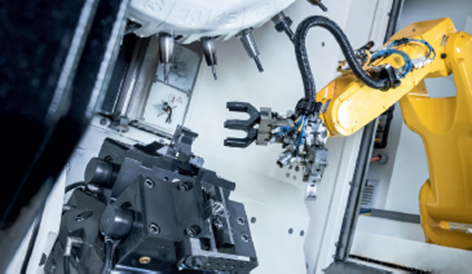
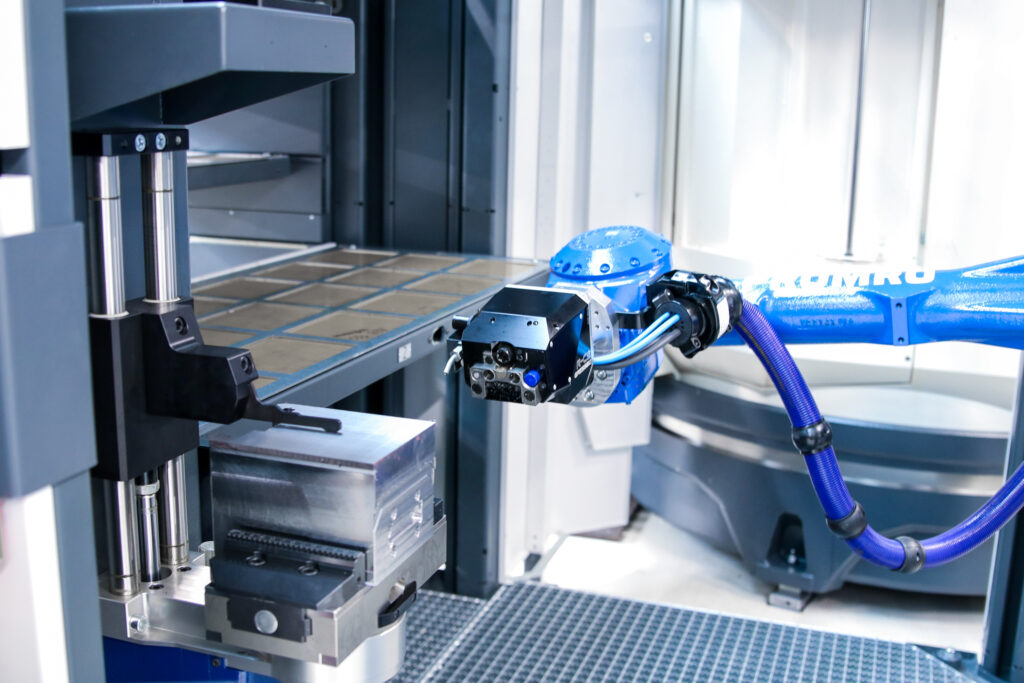
The R-C2 has been specially developed for automated and unmanned production. The clamping vise is picked up directly by the robot as a gripper, thereby enabling the workpiece to be gripped and clamped automatically.
Advantages:
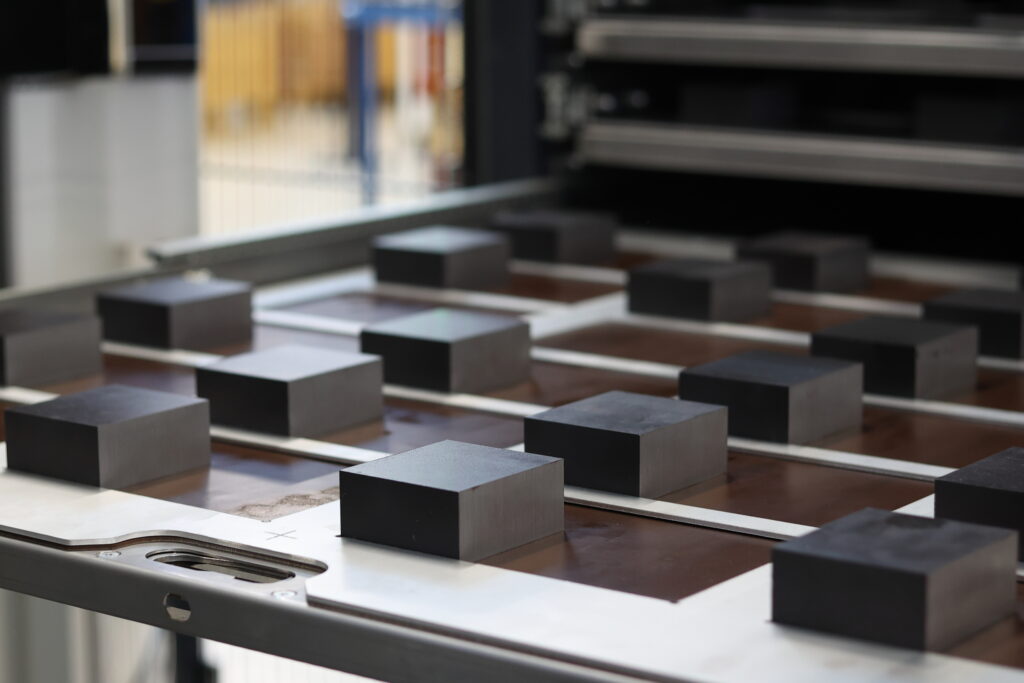
- The workpiece is clamped directly from the drawer
- The R-C2 performs both gripping and clamping functions simultaneously
- Automatic workpiece re-clamping for 6-side machining
- No manual intermediate processing required
- Ideal for unmanned and automated manufacturing processes
3. Vise automation for automated manufacturing
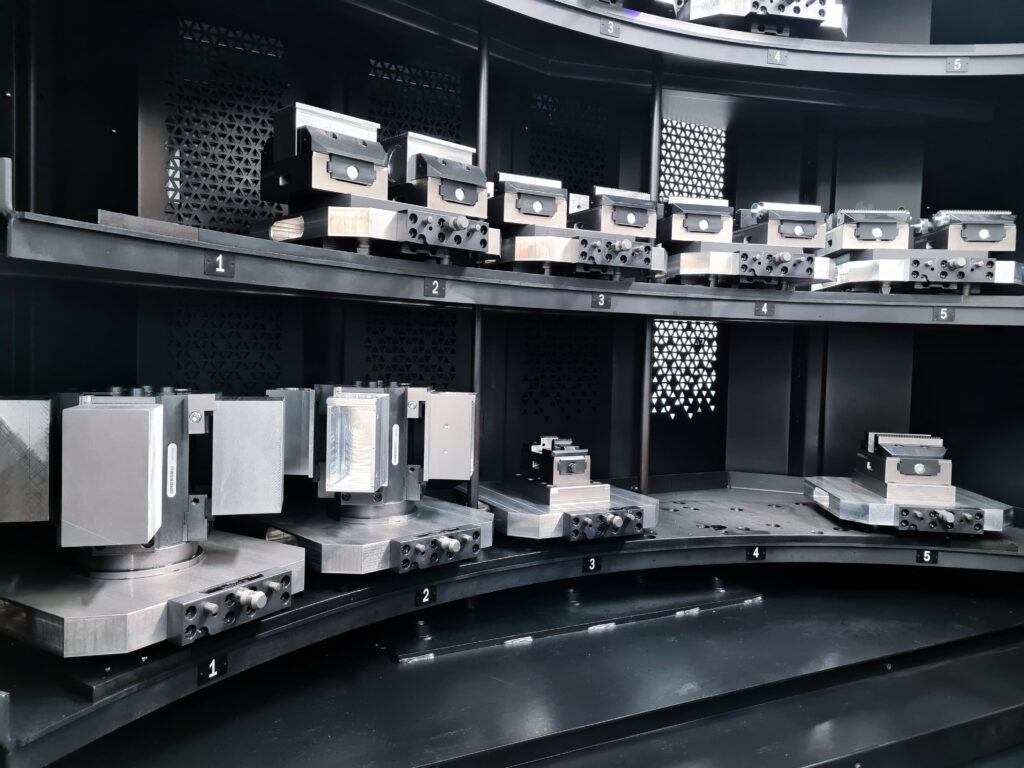
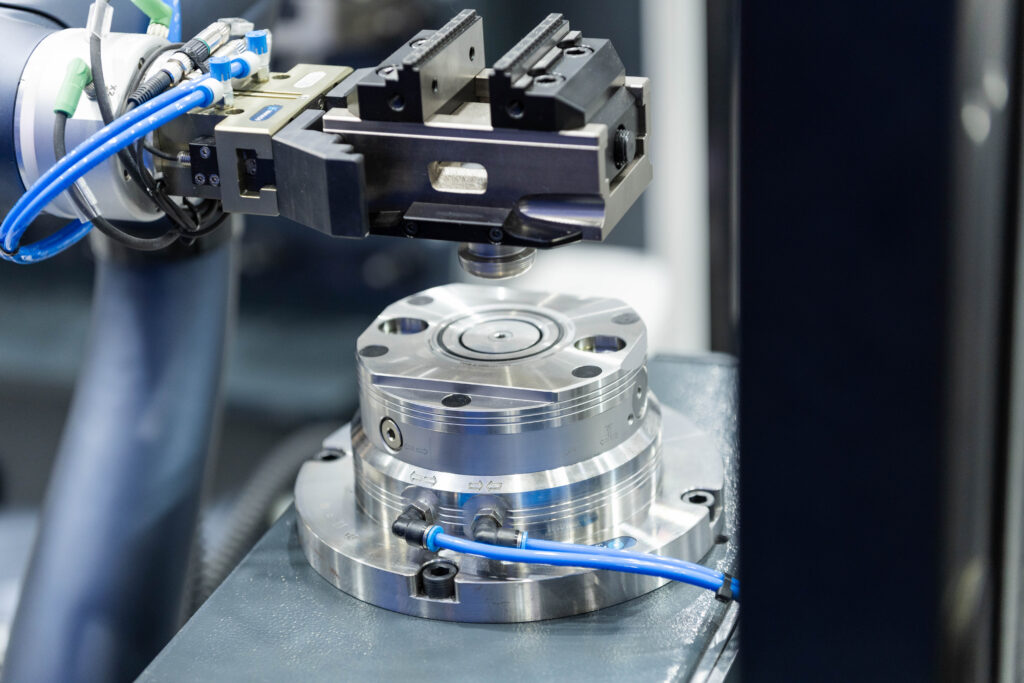
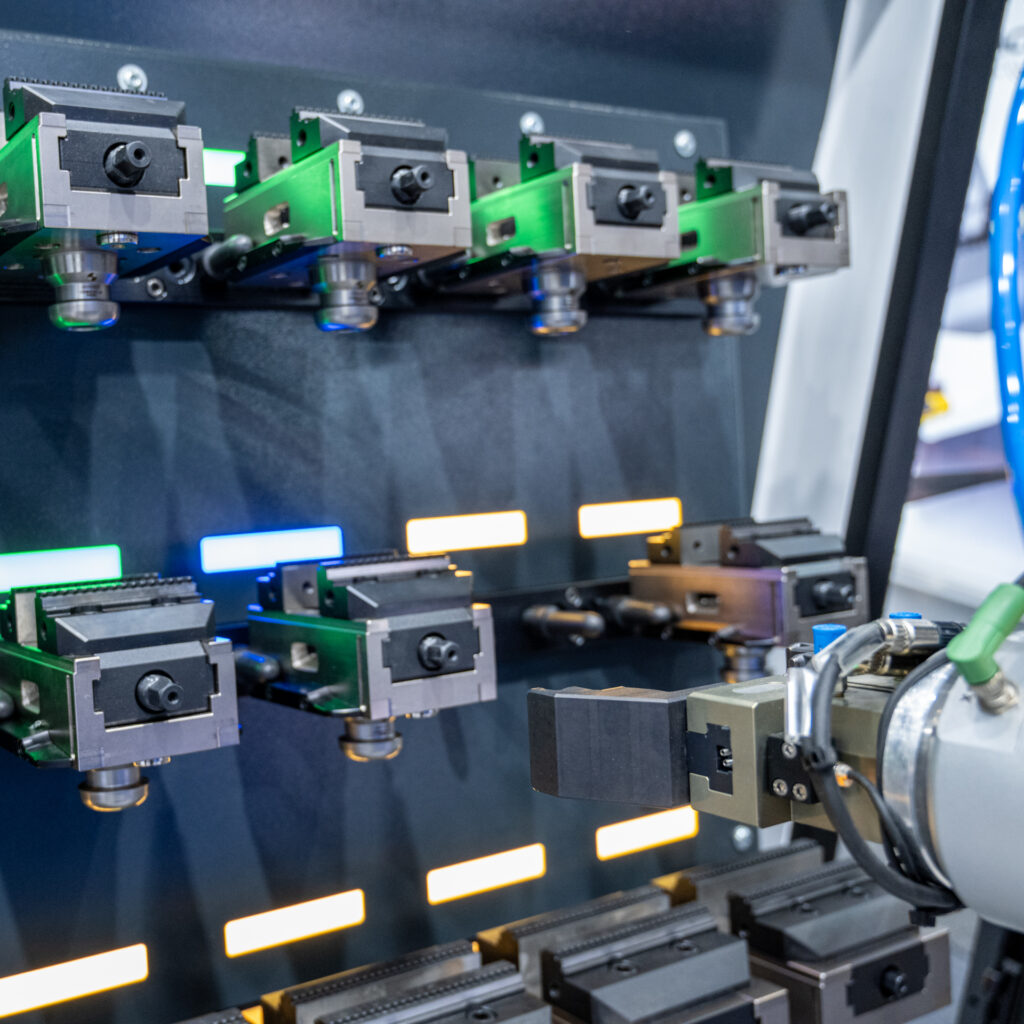
In vise automation, the clamping vises are supplied from a storage magazine. The workpieces are manually loaded into the vices and clamped outside the machine. The clamping vises, already fitted with workpieces, are then automatically transported into the machine.
The robot retrieves the prepared vice from the magazine and feeds it into the machine. The workpiece is then machined there. Once machining is complete, the vice can be removed from the machine again and the finished workpiece can be replaced.
The major advantage is that the workpieces are clamped outside the machine. Whilst the machine is machining one workpiece, further workpieces can already be prepared in the vises. This reduces non-productive time and ensures that machine uptime is utilised to the full.
Advantages:
- Workpieces are prepared outside the machine
- Clamping vises are fed automatically, together with the workpiece
- Short changeover times on the machine
- Simultaneous clamping and machining possible
4. Hydraulic clamping systems for direct workpiece loading
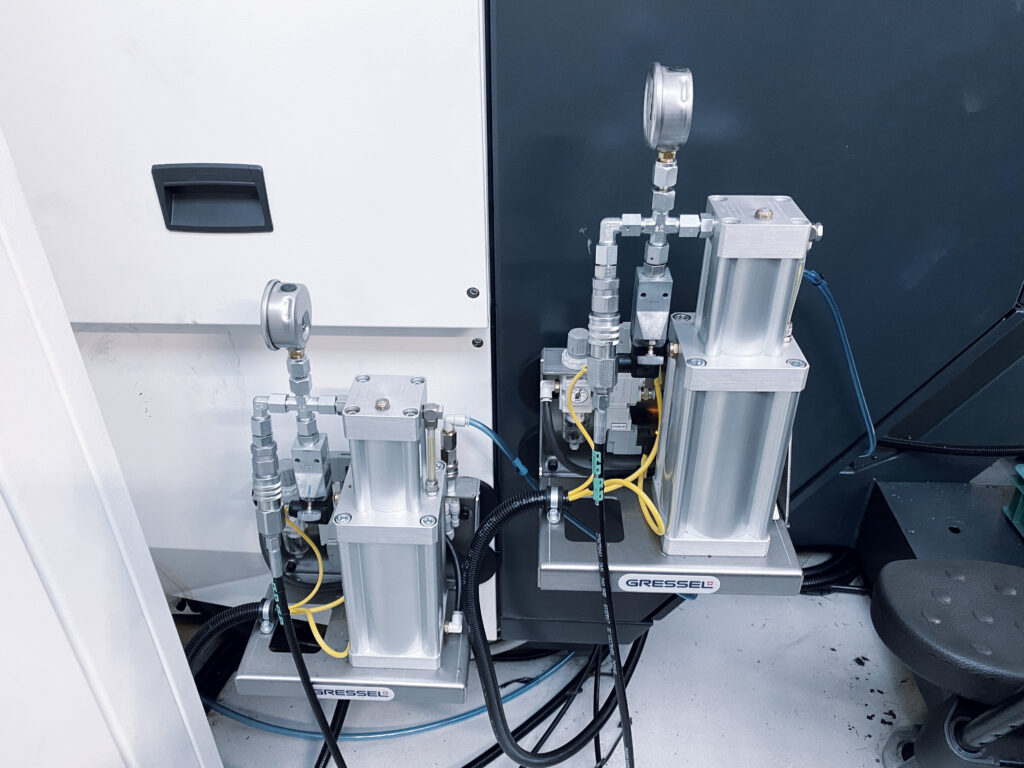
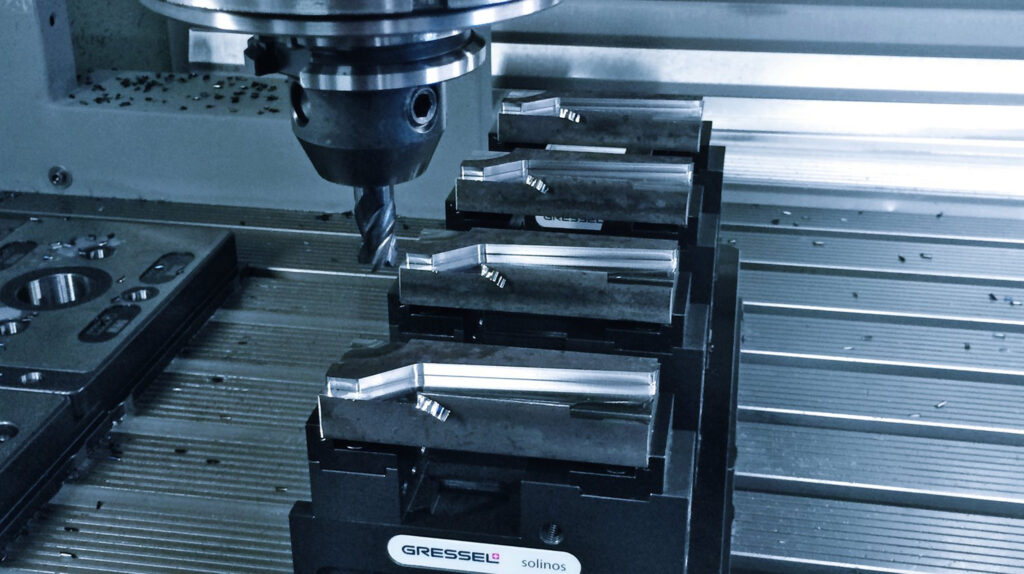
Another option for unmanned shifts is direct workpiece loading. In this process, the workpiece is placed directly into the clamping vise and clamped hydraulically. This solution offers particular advantages for high-volume production and automated loading and unloading processes.
GRESSEL offers a range of hydraulic clamping systems for this purpose, including:
- CLH large-stroke clamp for large clamping ranges
- SC5X hydraulic for 5-axis machining
- gripos hydraulic: a versatile machine vise
- solinos hydraulic for automated clamping tasks
Hydraulic clamping systems enable precise clamping forces and can be easily integrated into automated manufacturing processes. This makes them particularly suitable for applications where workpieces need to remain securely and consistently clamped for extended periods.
Which solution is suitable for unmanned manufacturing?
The choice of the right clamping method depends on the specific automation concept, the workpieces and the desired machine strategy.
Pallet automation:
The C2.0, S2 and D2 offer a high degree of flexibility with over 350 possible combinations. Pyramids and clamping towers, such as the gre4doc multi-workpiece clamping systems, also allow several workpieces to be clamped onto a single pallet.
6-side automation:
The R-C2 enables the automated clamping and machining of workpieces on all six sides.
Vise automation:
In vise automation, prepared clamping vises, including the workpiece, are automatically loaded into the machine and removed again after machining.
Direct workpiece loading:
Hydraulic clamping systems such as CLH, SC5X hydraulic, gripos hydraulic and solinos hydraulic are suitable for direct, automated workpiece clamping.
Our sales engineers will be happy to assist you in selecting the right clamping solution for unmanned production. Together, we will find the ideal solution for your application.