Complete Machining in Focus
Flexible automation solutions are becoming increasingly important in the production of individual parts and small batches. By partnering since 2021 to integrate the “R-C2” workpiece automation system into the “ROBOBOX” robot cells, SPINNER automation and GRESSEL are leading the way in this field: In the “ROBOBOXtreme” variant, for example, users gain access to fundamentally new automation possibilities.
In Germany, there are approximately 2,300 small and medium-sized enterprises whose core business is machining. If we include related metalworking companies, the total number is estimated to be around 5,000, most of which are medium-sized enterprises. In Switzerland, for which there are no official statistics on this, the figure is likely 1,900, and in Austria up to 1,200 companies. As diverse as these businesses may be, the key developments they must focus on today are often the same: automation, digitalization, and resource efficiency. When it comes to automation, the focus is on intelligent, flexible, and incrementally scalable solutions. And this is done with the familiar goals in mind: machine utilization beyond core working hours, competitiveness—including on the international stage—and alleviating the shortage of skilled workers. It is not uncommon for the focus to shift from pure unit costs to flexibility and reducing the workload on employees.
Machine fragile workpieces from start to finish
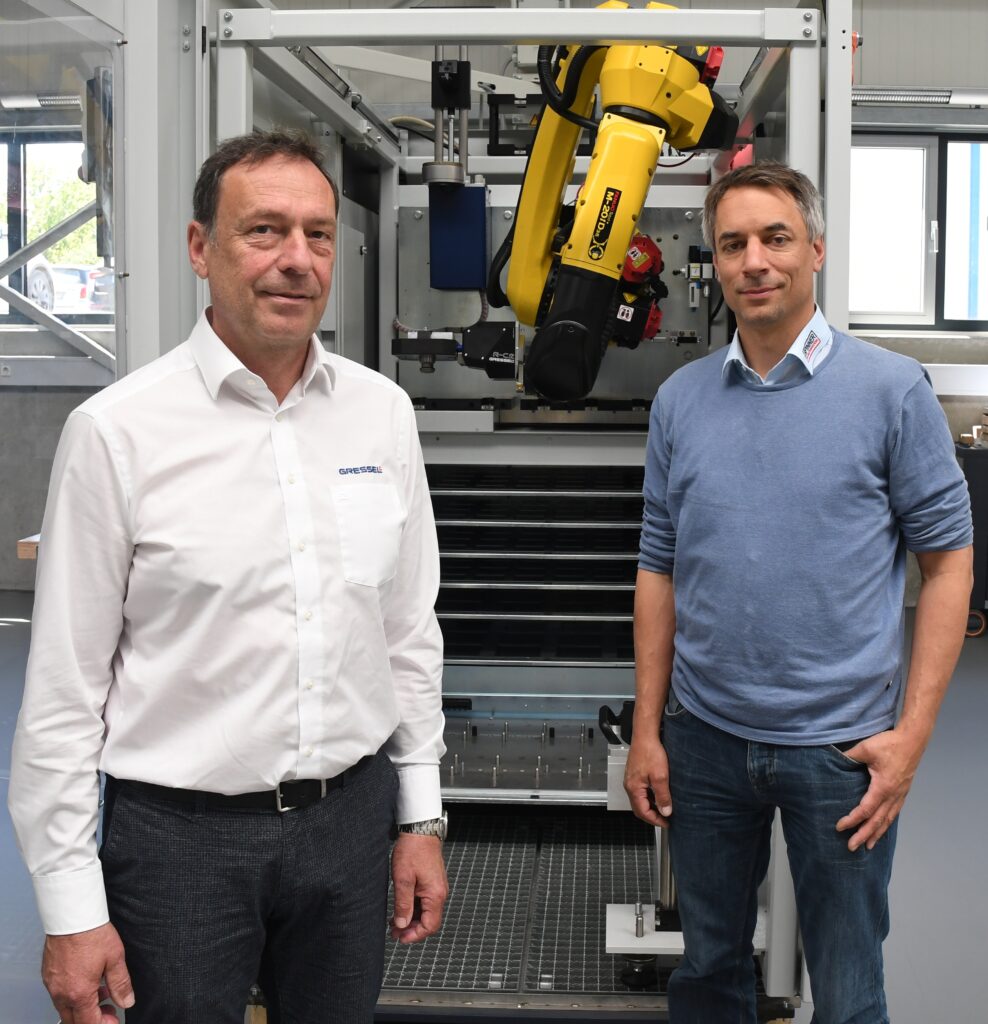
So what might such an automation project actually look like? The example of Wyler, a manufacturer of high-precision measurement technology based in Winterthur, is a good illustration of this. Where automation technologies from SPINNER automation and GRESSEL now work together, the original requirement was to completely manufacture housings for digital inclinometers measuring approximately 150 x 100 mm on a Spinner 5-axis machining center, while maintaining accuracies in the hundredths range. Because the aluminum housings are very pressure-sensitive, the clamping forces also had to be kept low. “The workpiece automation was implemented using a ROBOBOXtreme, which includes GRESSEL’s R-C2 system,” explains Dominik Jauch, Managing Director of SPINNER automation. “Following preliminary acceptance of the system in Markgröningen, it has since been put into operation and now also serves as a reference project.” GRESSEL is currently making fine adjustments to the R-C2 system to reliably prevent marks on the housings.
That’s the general outline. But what exactly sets these systems apart? The five-year partnership between SPINNER Automation and GRESSEL for the integration of the R-C2 workpiece automation system stems from a clear trend among users toward complete machining. Equally clear are the benefits this collaboration offers users: an automated, complete solution from a single source. In implementing this solution, the partners’ technical expertise goes hand in hand with their close coordination. Andreas Brunhofer, Automation Product Specialist at GRESSEL: “Through our collaboration, SPINNER Automation has developed a deep understanding of the R-C2 solution. This is very important for our joint projects because it is a system that requires explanation.” So what exactly is involved in this collaboration?
A well-developed concept tailored to each customer’s specific needs
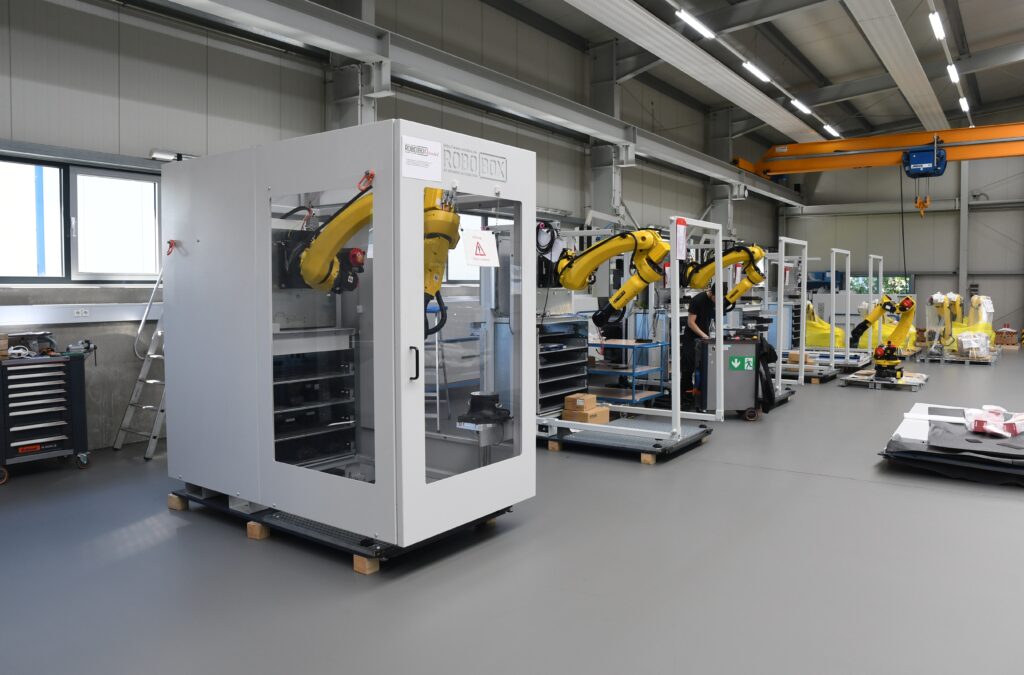
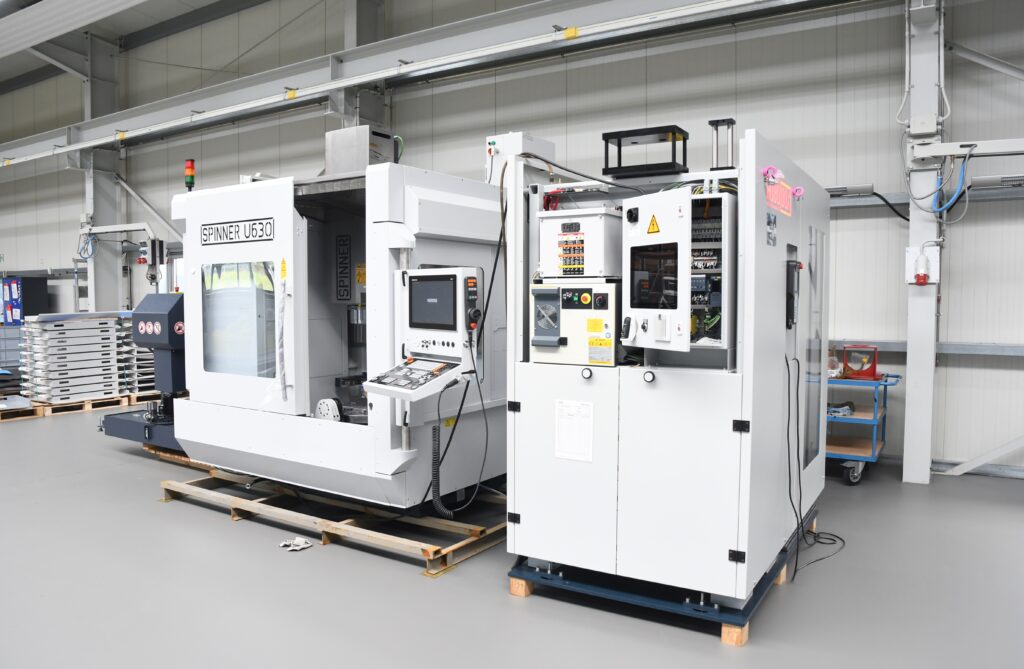
“The basis for these integrations is our ROBOBOX, which is available as a concept for robot-assisted automation cells in various configurations—ranging from simple handling of raw and finished parts to complete 6-sided machining,” reports Jauch. In the standard version, the ROBOBOX operates with a Fanuc robot that loads parts from a drawer system using a parallel double gripper or a centered single or double gripper with a load capacity of 12 kg. “Of the five drawers, three typically have a height of 150 mm, while the other two are 250 mm high,” Jauch continues. “In addition, three grid trays with different configurations are available for separating the workpieces. In total, the ROBOBOX can hold up to 225 parts.” Thanks to the drawers that extend in two directions, raw parts can be reloaded without interruption even during machining. This enables 24/7 production with short setup and downtime. For larger components, grid trays are available for 24 parts up to 100 x 100 mm and for 12 parts up to 150 x 150 mm. Job management is handled via the graphical input menu on the ROBOBOX display, which also allows for machine parameterization and provides information on the current job status,” emphasizes the managing director.
A New Dimension in Workpiece Automation
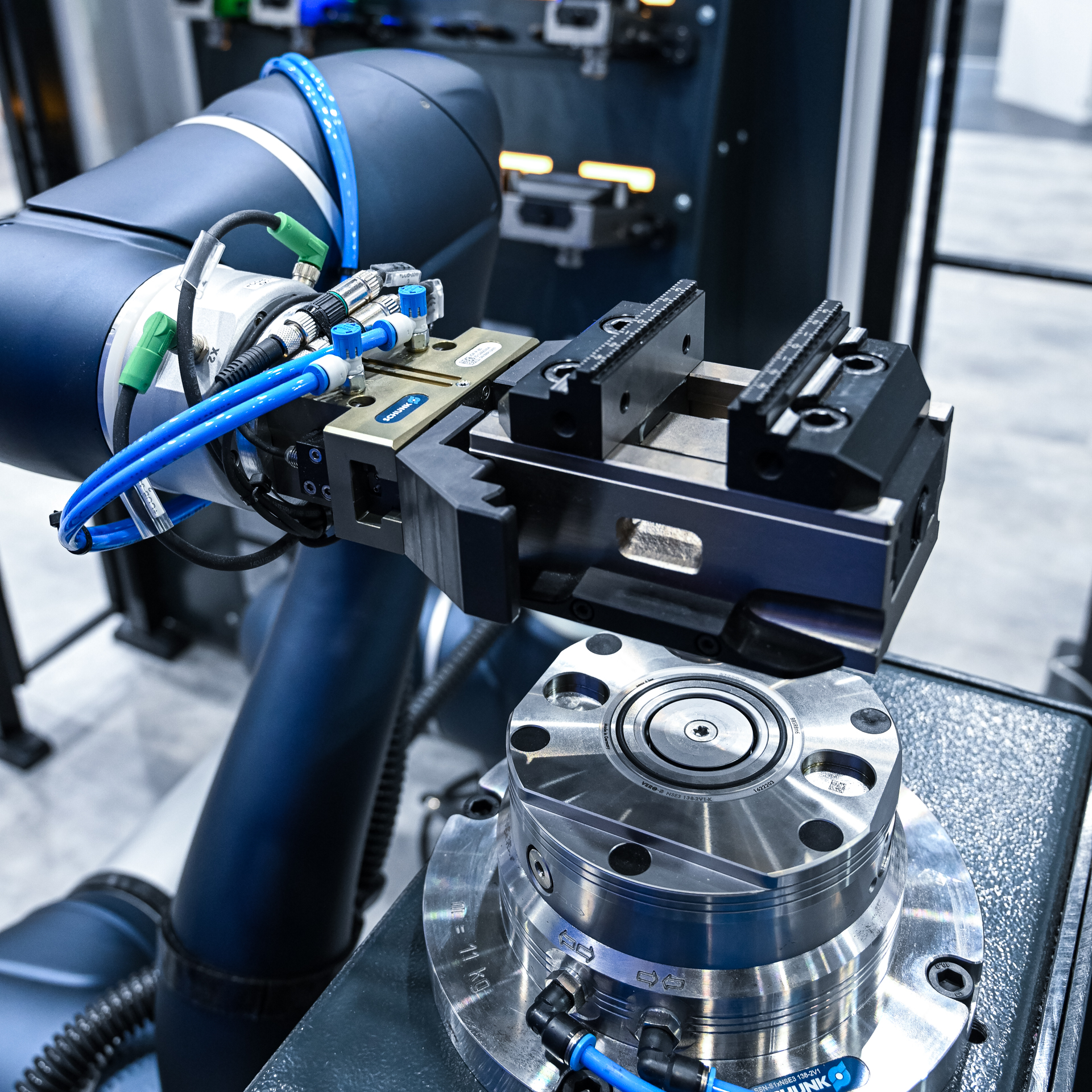
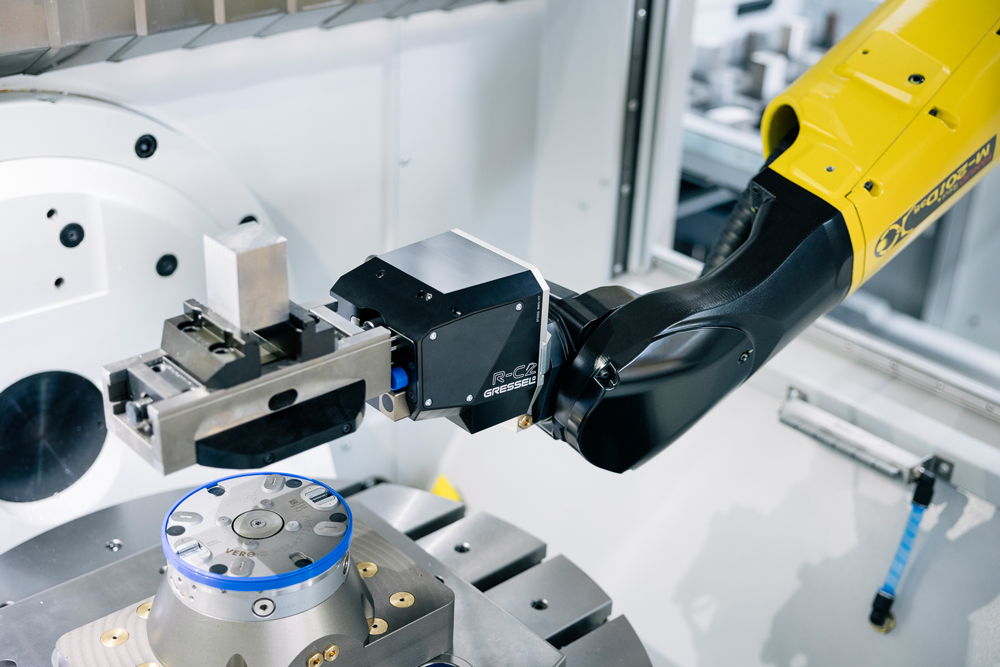
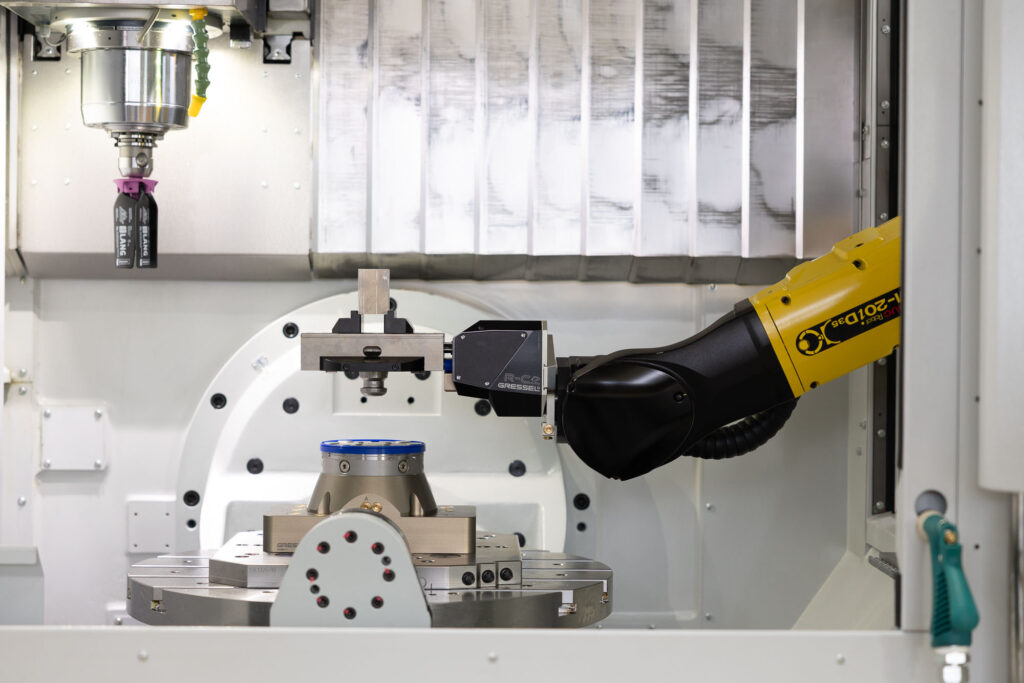
In the ROBOBOXtreme version, automated workpiece handling goes one step further: here, all six sides of the workpiece can be machined fully automatically. To achieve this, the R-C2 workpiece automation system is fully integrated into the cell. “As a system solution for batch sizes up to 500 pieces, offering clamping forces of up to 30 kN, the R-C2 combines the advantages of direct loading and pallet automation,” emphasizes Brunhofer. “To achieve this, the system consists of a C2.0 centric clamping vise, an R-C2 module, a ‘gredoc’ zero-point clamping system, and a ‘VERO-S’ console—each equipped with a media coupling. Finally, the R-C2 6-side station is a crucial component.”
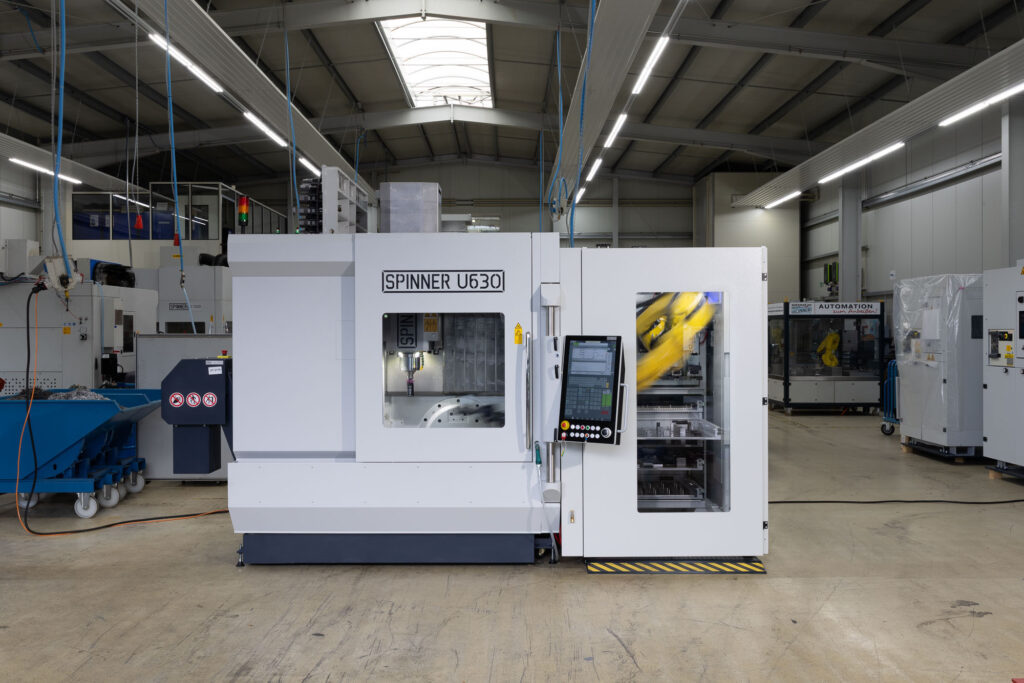
During milling, the workpiece is then picked up by a robot from the centric clamping device and placed into a ROBOBOX drawer, clamped, and loaded into the machine’s zero-point clamping system like a pallet. After machining in OP10, the 6-sided station enables complete machining. “To do this, the OP20 clamping device is inserted into the station and the OP10 clamping device is positioned above it,” explains Brunhofer. “The component is then transferred, with a pressure finger ensuring the workpiece is correctly supported. After the R-C2 module has clamped the workpiece fully automatically for OP20, the finger retracts. Finally, the component is reloaded into the machine via a robot.” Components up to a size of 217 x 217 x 217 mm can thus be fully machined fully automatically. The R-C2 automation reduces setup and changeover time and enables highly flexible, mixed-production runs. “In addition, ROBOBOXtreme extends machine uptime, increases output, and reduces the time and labor required of employees,” Jauch summarizes.
Significant potential for single-unit production
Wyler is just one example among many. You don’t have to be a prophet to predict that workpiece automation will continue to grow in the industry. This is especially true for 6-sided machining. The increasing need for flexibility, shrinking batch sizes, and the shortage of skilled workers will simply continue to drive up demand for such solutions. According to SPINNER automation, this trend is evident in the automotive and medical technology industries as well as in aerospace, the luxury goods sector, and the defense industry. In many SMEs, the automation of single-unit production represents a growing segment. “There’s one more thing,” says Jauch. “If you take a robot cell for the simple loading and unloading of workpieces, it can pay for itself in one to two years even with a moderate increase in runtime,” he calculates. “The same applies to the ROBOBOXtreme variant, which offers even more benefits.” So the conditions are favorable.
SPINNER automation GmbH
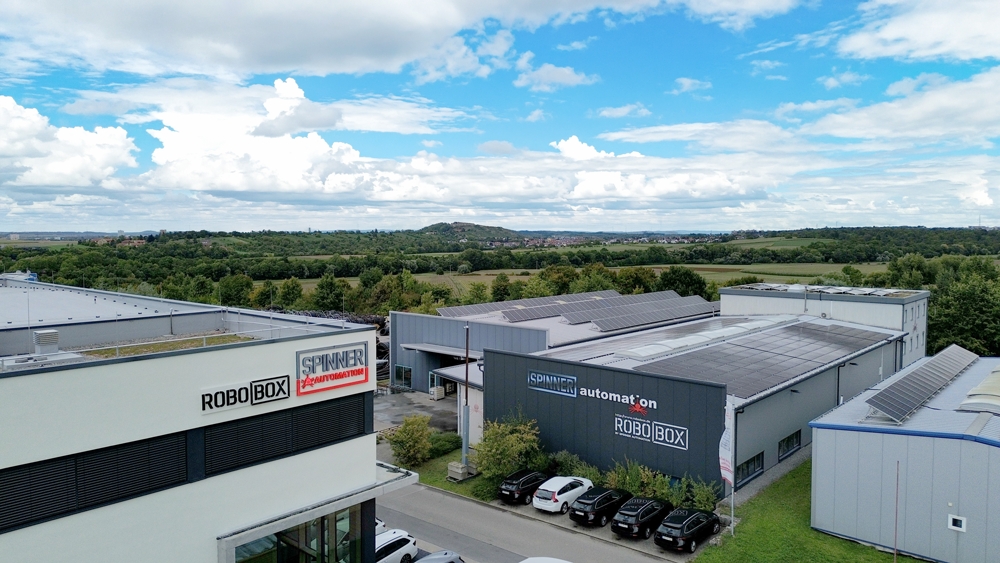
SPINNER automation is an independently operating company closely affiliated with Spinner Machine Tools, headquartered in Markgröningen near Ludwigsburg. Founded in 2002, it currently employs around 70 people, generating annual revenue of approximately 20 million euros. As a provider of highly specialized automation solutions for turning and milling, SPINNER automation integrates hardware, software, and the process into a holistic approach. In contrast to standard systems such as bar feeders or pallet changers, the company develops customized solutions tailored to customer requirements, with a central focus on combining mechanical, software, and process expertise. Software development is crucial to the success of SPINNNER automation, as it enables cost-effective automation even for batch sizes of one. Software development also focuses on user-friendliness, integration into the CAD/CAM process, and integration into higher-level systems for automated job transfer and process control. The scope of projects ranges from simple robot cells for loading and unloading workpieces to complex production lines complete with laser marking, workpiece measurement, and washing systems.
In addition to turning and milling processes, these solutions also cover a wide variety of workpieces, such as saw-cut sections, castings, and complex blanks. At the same time, the range extends from micro-parts to workpieces weighing up to 200 kg. SPINNER automation’s customer base is diverse, comprising primarily small and medium-sized enterprises, but also larger industrial companies across a range of sectors, including the automotive industry, medical technology, aerospace, and the luxury goods and defense industries.