More machine uptime, less set-up time and a reduced workload for staff: automation can serve a variety of purposes. The key is not to start by looking at the machinery itself, but rather at your own workpieces, processes and requirements.
Anyone looking to automate milling machines faces a number of questions: Which parts are suitable? How much flexibility is required? Can the existing machine be integrated? And which clamping technology will reliably support the process?
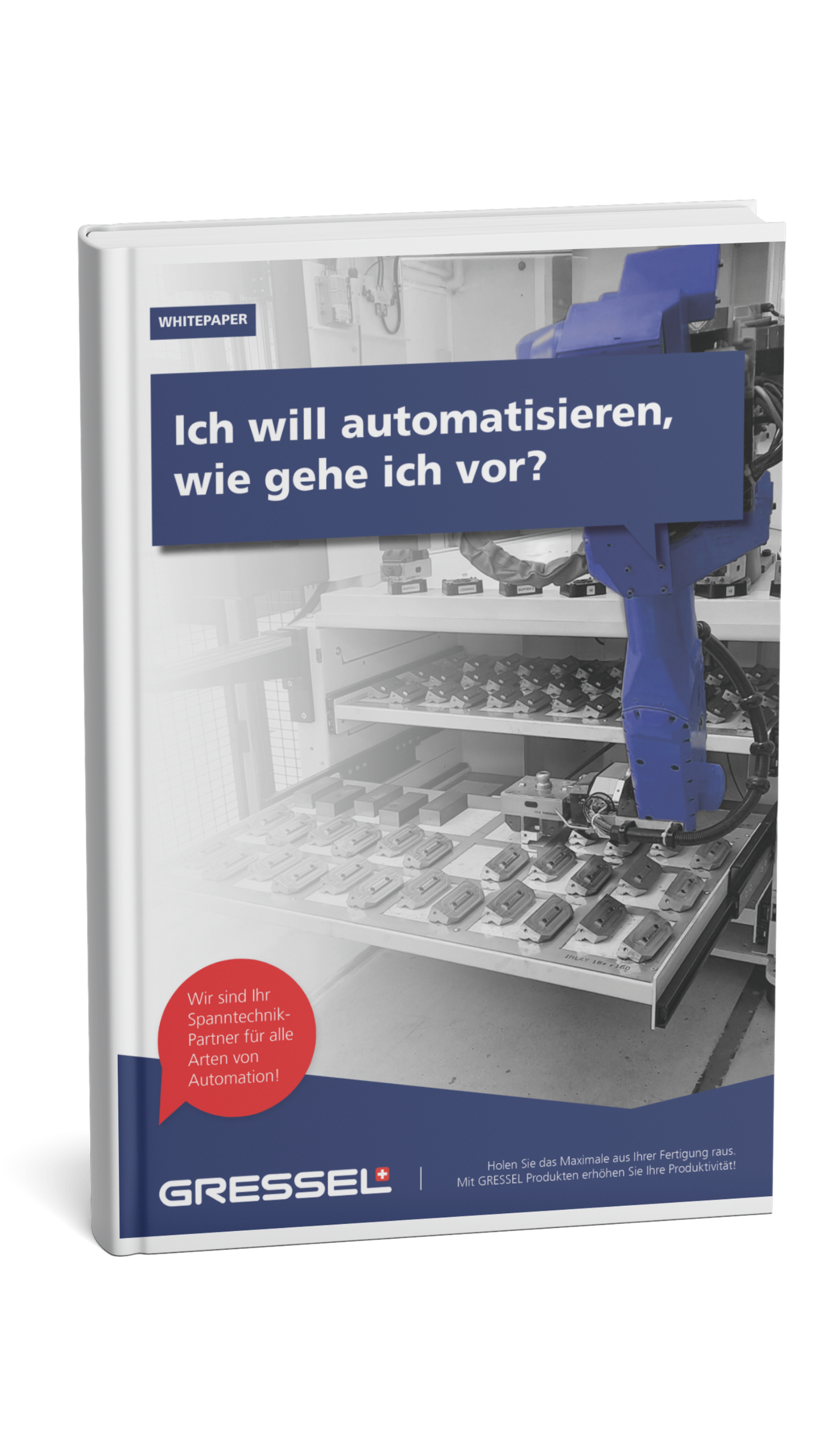
The GRESSEL white paper ‘I want to automate, how do I proceed?’ sets out a structured approach, from defining your initial objectives through to selecting a suitable automation and clamping solution.
1. Set objectives: What is the automation intended to achieve?
The first step is to ask what specific benefits automation is intended to deliver. Common objectives include:
- Increase machine uptime and make the most of off-peak hours
- Reducing set-up and non-productive times
- Relieving staff of repetitive tasks
- Process orders more quickly
- make better use of existing machinery and resources
- Reducing production costs
The more clearly the objectives are defined, the easier it will be to assess later on whether an automation solution is suitable for the operation. It makes sense to describe the current situation using key performance indicators, such as current set-up times, productive machine hours or production costs per workpiece. This makes it clear how success can be measured.
2. Analyse workpieces and the manufacturing process
Not every workpiece is equally suited to the same automation strategy. The following points, amongst others, are important for the analysis:
- Material, dimensions, weight and geometry
- Workpiece variety and batch sizes
- necessary access for tools
- Clamping force and process reliability requirements
The sequence of operations between the individual steps is also important. Does a part need to be re-clamped to machine the sixth side? Can a new workpiece be prepared whilst the machine is machining another one? The more closely the process is examined, the more precisely a solution can be developed.
3. Use the product mix and batch size as a guide
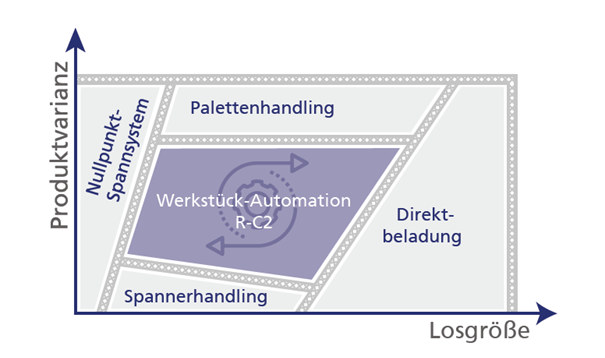
Product variation and batch size provide an initial indication of which type of automation is suitable. For large batch sizes and low variation, direct workpiece loading using a robot can be an efficient solution. Where workpieces change frequently and batch sizes are small, flexible clamping concepts and short set-up times are particularly important. For moderate combinations of variation and batch size, a workpiece automation system such as the R-C2 can really come into its own.
These are guidelines, not rigid rules. Workpiece geometry, machine design, the desired operating time and the existing infrastructure also influence the choice.
4. Check existing machinery and infrastructure
Before investing in new machinery, it is worth assessing your existing machinery. This involves, for example, automatic doors, machine interfaces, clamping systems and the possibility of integrating the automation solution safely and reliably.
The infrastructure also includes:
- Space requirements, machine layout and safety zones
- Energy Supply and Network
- Tool supply and materials logistics
- Communication between the machine and the automation system
- Programming and existing automation expertise within the team
- the option to integrate further machines
This assessment provides early clarity on which adjustments are necessary and which components can be reused.
5. Select the appropriate automation and clamping solution
Clamping technology links the workpiece, the machine and the automation process. It must securely hold the workpiece, allow access for machining and reliably support automated changeovers. Depending on the task, various approaches may be considered:
Pallet automation: Workpieces are clamped onto prepared pallets and automatically loaded into the machine. Zero-point clamping systems, multi-jaw chucks, pyramids or clamping towers can speed up the changeover process and provide multiple clamping stations. This is particularly suitable when different jobs need to be prepared flexibly.
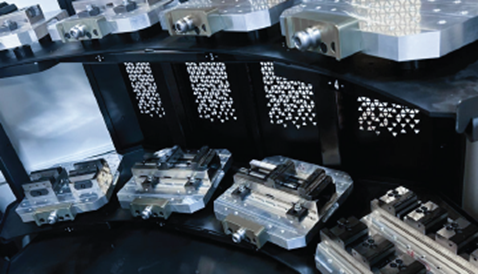
Workpiece automation: with the R-C2: The R-C2 combines gripping and clamping functions. It is designed for flexible workpiece machining and, depending on the process, also supports automatic re-clamping for 6-side machining.
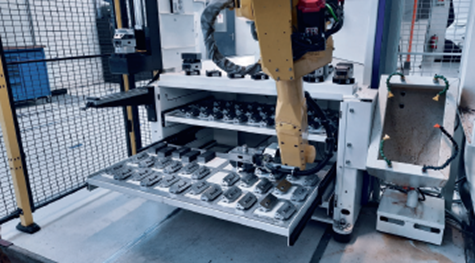
Direct workpiece loading: A robot places the workpieces directly into the clamping device. This method can achieve high output for recurring workpieces and suitable batch sizes.
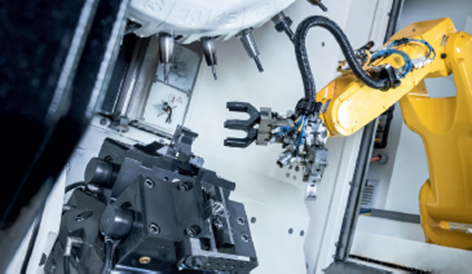
Which solution is best depends on the specific application. It is important to consider the automation concept, clamping technology and machining process as a whole.
Assessing the economic viability of automation
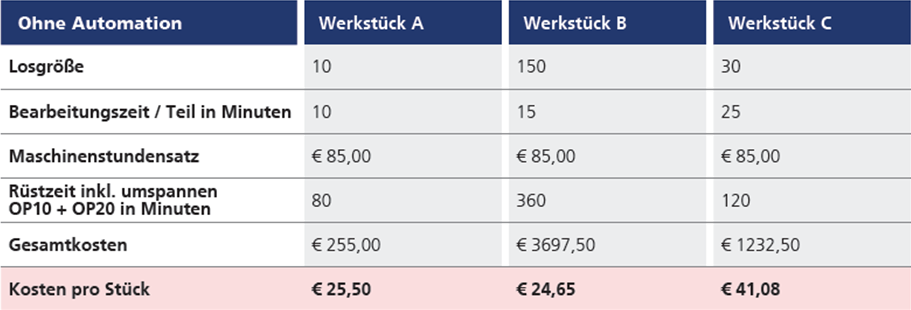
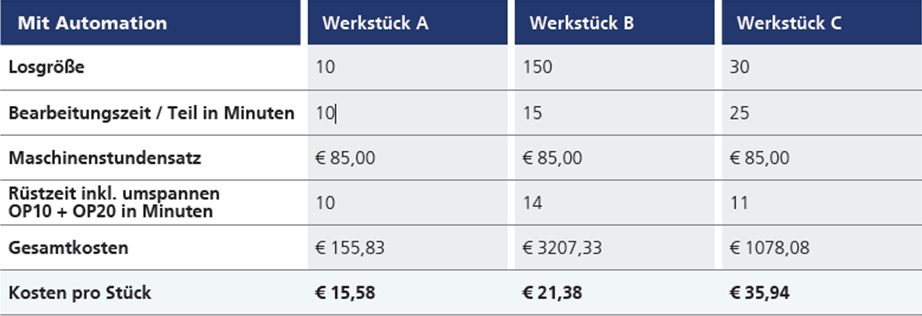
An automation solution should not only work from a technical point of view, but also prove its worth in day-to-day production. In the white paper, a sample calculation illustrates how shorter set-up times can affect the cost per workpiece. The figures are based on the machining times, batch sizes and machine hourly rates assumed in the white paper; they therefore do not constitute a universal guarantee of savings.
When carrying out your own assessment, you should take into account factors such as investment, set-up time, machine uptime, labour costs and expected capacity utilisation. This will enable you to evaluate the potential benefits in relation to your own process.
Sample calculation for three workpieces, with and without automation
Continuous improvement
Automation does not end with commissioning. Operating times, downtimes, changeover procedures and process reliability should be reviewed regularly. This provides starting points for adapting workflows, providing targeted training for staff and gradually improving productivity.
The first step towards automation is a thorough analysis. By carrying out a structured assessment of objectives, workpieces, machinery and infrastructure, you can establish a solid foundation for the right solution – and assess the expected benefits more clearly.
In the white paper ‘I want to automate, how do I proceed?’, you will find a checklist and further guidance on planning.
If you would like to automate your production processes, our GRESSEL sales engineers will be more than happy to advise you: https://www.gressel.ch/en/contact-person/